New Order
Power, Corruption & Lies
About This Review
Re-Play reviews look back at landmark albums — how they were received at the time of release, the influence they've had on music in the years since, and where they stand today.
At Release
New Order's position in 1983 was peculiar. They were the survivors of Joy Division, carrying the weight of Curtis's death and the obligation to honor a legacy while also asserting the right to exist on their own terms. Movement, their debut, had largely leaned into the Joy Division shadow in ways that were understandable but limiting. Power, Corruption & Lies was the record on which they stepped out of it entirely, and the instrument of that emancipation was a Roland TB-303 bass synthesizer they had acquired somewhat by accident and were still learning to use.
The album arrived in May 1983 and was met with reviews that recognized it as a departure without fully anticipating its significance. Melody Maker found it 'cold' — a complaint that in this context is almost certainly a category error. The coldness was functional, a feature rather than a deficiency, a deliberate thermal management of emotions that Joy Division had expressed at full heat and incinerating intensity. NME appreciated the synthesis of electronic and live elements more clearly, and several reviewers noted that 'Blue Monday,' the standalone twelve-inch released two months earlier and not included on the album itself, had opened a space that the LP then populated.
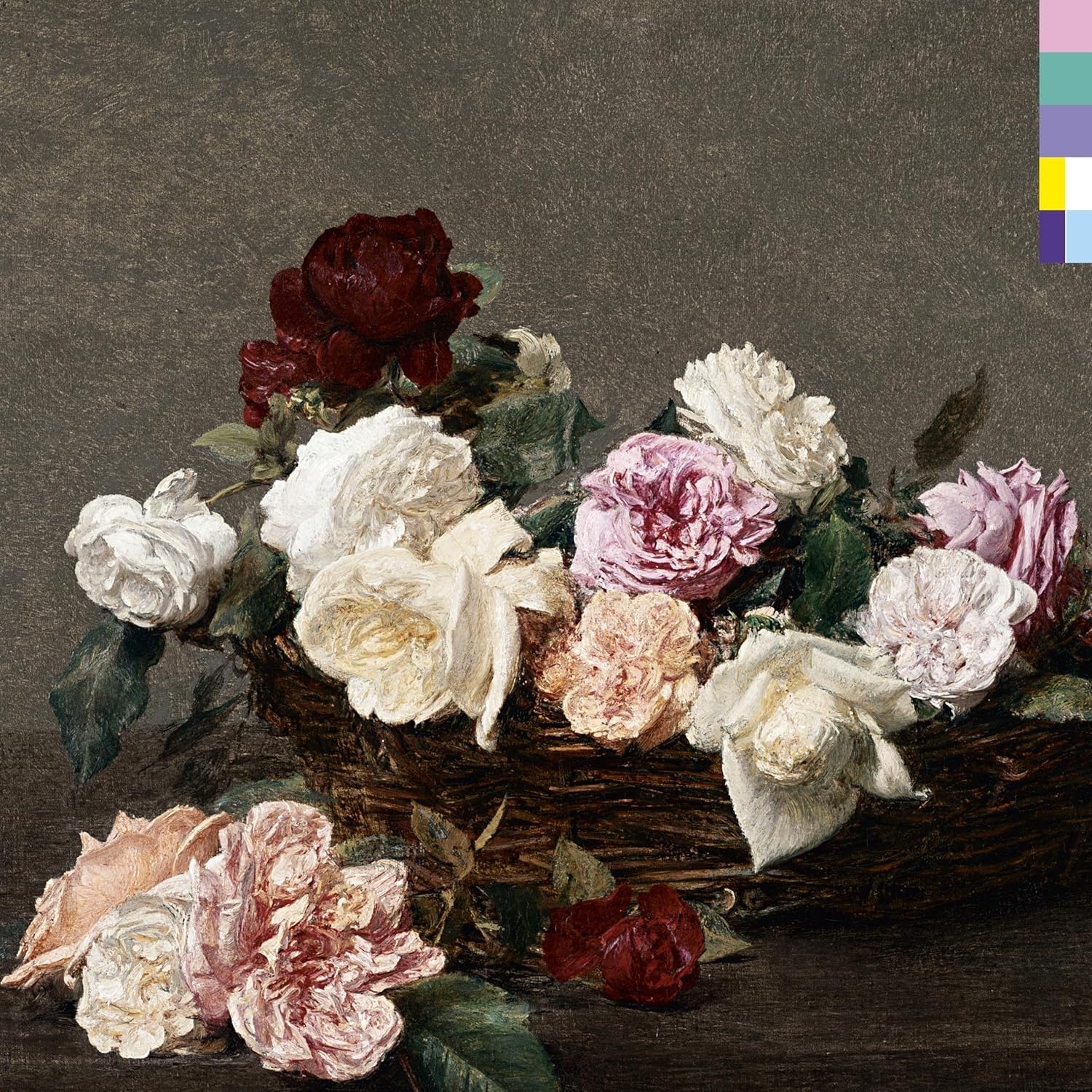
The Factory Records artwork by Peter Saville — a bouquet of flowers reproduced from Fantin-Latour, entirely without text on the cover — was itself a statement of intent. This was not a band interested in the conventional rituals of promotion. The music would have to speak for itself, and the music was speaking a language that had not previously existed in quite this form: rock instrumentation and electronic sequencing operating as genuinely equal partners, each enriching and complicating the other.
Every producer who currently reaches for a synth bass line to underpin a guitar melody is working in the space New Order opened up in 1983 — a space so fully inhabited now it has become the default terrain.
The Influence
The structural argument of Power, Corruption & Lies — that the vocabulary of electronic dance music and the vocabulary of rock could be combined without either being diminished — became the premise on which a significant portion of subsequent popular music was built. The E Street Band and synthesizers; guitar bands using drum machines; the entire continuum from Depeche Mode's subsequent work through to Radiohead's OK Computer and Kid A runs along the path that this album cleared.
More specifically, 'Age of Consent' and '5 8 6' showed that the rhythmic precision of sequenced music could coexist with the harmonic ambiguity and emotional openness of guitar-based composition. This combination is now so common as to be unremarkable — in contemporary pop and indie music, the hybrid approach is simply the default. In 1983 it was a revelation. Every producer who currently reaches for a synth bass line to underpin a guitar melody is working in the space New Order and their engineer Michael Johnson opened up in Strawberry Studios over several months of deliberate experimentation.
Where It Stands Today
Power, Corruption & Lies sounds astonishing on a modern playback system. The low end has a clarity and weight that contemporary producers spend considerable effort trying to achieve. Hooky's bass playing — melodic, high-register, unapologetically prominent in the mix — predates the current vogue for bass as lead instrument by thirty years and still sounds more natural than most of its descendants. The album's internal emotional range is wider than its reputation as a dance record suggests: 'Your Silent Face' is one of the most genuinely beautiful things produced by any band of the era, a piece of sustained melodic composition that has no interest in any genre's conventions.
New Order would make better individual songs in the years following this record, and arguably more consistent albums. But Power, Corruption & Lies is the document that most completely represents the moment when their synthesis became fully realized — when the two halves of what they were doing fused rather than cohabiting. It remains, four decades later, an object of considerable wonder.