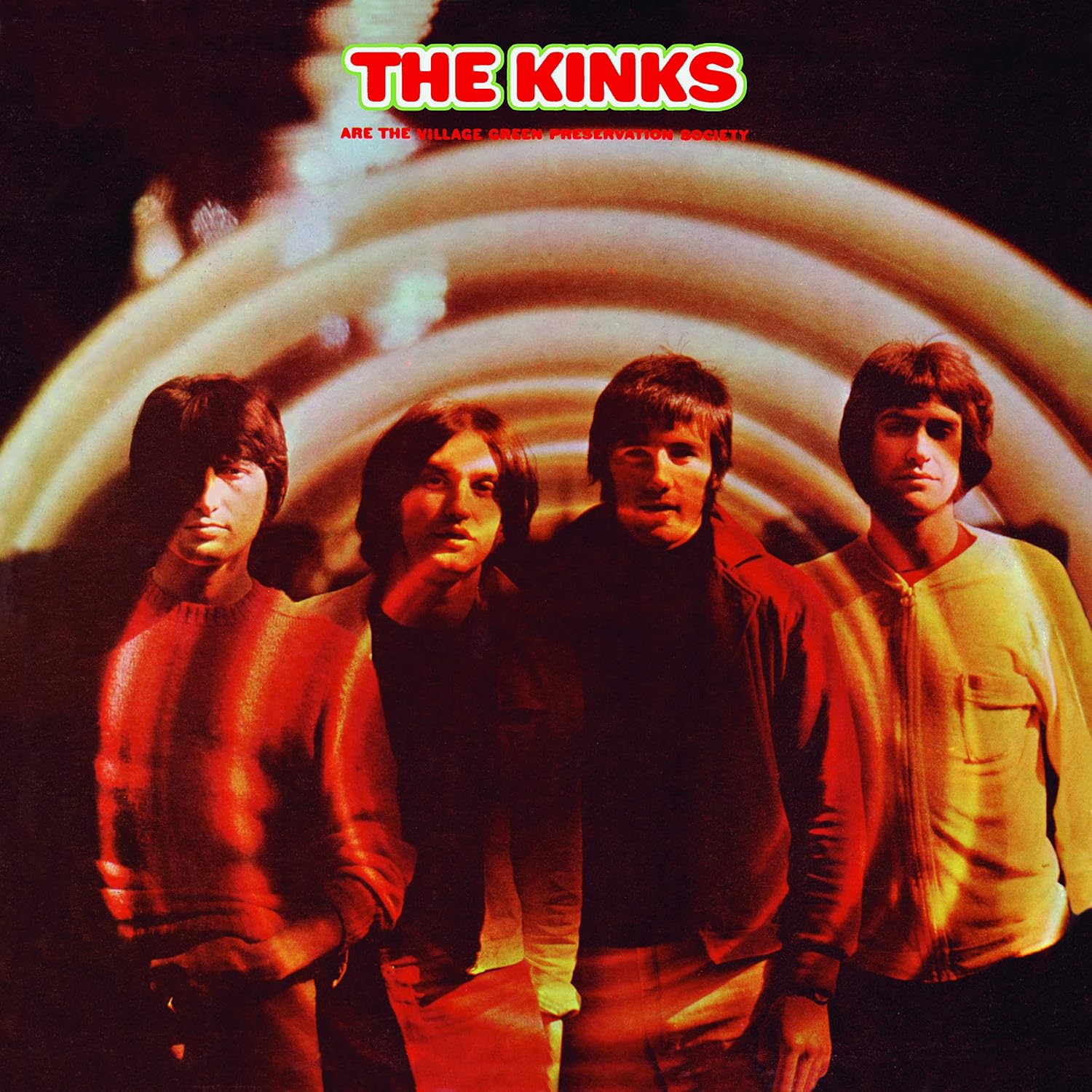
The Kinks
The Kinks Are the Village Green Preservation Society
About This Review
Re-Play reviews look back at landmark albums — how they were received at the time of release, the influence they've had on music in the years since, and where they stand today.
At Release
There is a particular cruelty in releasing a quiet, elegiac album about the disappearance of an England that was already disappearing in the same month that the Rolling Stones put out Beggars Banquet and the Beatles released the White Album. The Village Green Preservation Society arrived in November 1968 into a market that had collectively decided the future was the primary territory of interest, and Ray Davies had written a record entirely preoccupied with the past — with steam trains and village greens and draught beer and the kind of England that existed, if it had ever fully existed, in the imagination of those who feared it was being erased. The commercial consequences were precisely what you would expect: the album sold poorly, failed to chart in America, and reached only number 22 in the UK.
The reviews were respectful but puzzled. Music critics in 1968 had been trained by the preceding two years to expect escalation — psychedelic expansion, conceptual ambition, technological experimentation. What Davies delivered instead was reduction: acoustic guitars, music hall arrangements, songs about specific and modest subjects rendered with an almost novelistic attention to the particular over the general. Melody Maker found it charming but slight. NME was warmer, recognizing in the album a coherent artistic vision while remaining uncertain whether that vision had commercial implications. The answer, as it turned out, was no — at least not immediately.
The band was in a fragile state. Ray Davies's creative relationship with his brother Dave had always been contentious, and the commercial pressures following a string of American chart bans — the US authorities had effectively barred the band from touring there for four years over a union dispute — had left the Kinks in an ambiguous position. They were critically respected and commercially uncertain, a position that Davies translated, with considerable artistic intelligence, into the album's central preoccupation. Village Green is, among other things, a record about the experience of watching the world accelerate away from you.
Davies mourned something real while being fully aware that the mourning was itself a kind of sentimentality — and he held both positions simultaneously without the record collapsing under the contradiction."
The Influence
The Village Green Preservation Society's influence was not immediate, and its route to canonical status was indirect. Throughout the 1970s the album existed primarily as a private enthusiasm shared among musicians and critics who sensed its importance without being able to fully articulate it. Its rehabilitation came gradually, accelerating in the late 1970s and early 1980s when the bands of the British post-punk era — the Jam, most conspicuously — recognized in Davies's English specificity a template for their own work. Paul Weller has cited the album repeatedly as a formative text, and the Jam's engagement with English social realism in songs like 'English Rose' and the entire fabric of Setting Sons draws directly from the approach Davies pioneered here.
The longer and more diffuse influence runs through every British rock musician who has subsequently insisted on the validity of the local, the modest, and the specifically English as subject matter. Blur's Parklife, which is probably the 1990s record most obviously in conversation with Village Green, took Davies's methodology — the character study, the English pastoral inflected with melancholy, the music hall rhythms domesticated into pop — and deployed it in a specifically 1990s context. Pulp's Different Class pursued parallel territory. Both records are unimaginable without the precedent Davies set in 1968. The album is also regularly cited by American indie and lo-fi musicians who have found in its very particular Englishness a model for how to make music about a specific place without losing universal resonance.
Where It Stands Today
The Village Green Preservation Society has undergone one of the more dramatic rehabilitations in the history of rock criticism. A record that shifted modest numbers in 1968 now routinely appears in lists of the greatest British albums ever made, and it has developed the status of a kind of secular scripture among a certain strain of music enthusiast: the people who find consolation in the idea that the things being lost are worth mourning, that specificity and domesticity are legitimate artistic territories, that a song about a pond can carry as much emotional weight as a song about the cosmos.
What holds up most completely is the quality of Davies's writing, which has aged in the way that genuinely good prose ages — not becoming dated but becoming more clearly itself. 'The Village Green Preservation Society,' 'Do You Remember Walter,' 'Picture Book,' and 'People Take Pictures of Each Other' are constructed with a precision and a tenderness that very few songwriters in any era have matched. The album's sadness is entirely without self-pity, which is a remarkable achievement. Davies was mourning something real while being fully aware that the mourning was itself a kind of sentimentality, and he managed to hold both positions simultaneously without the record collapsing under the contradiction.