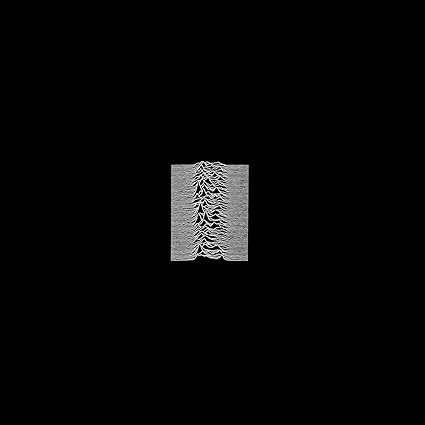
Joy Division
Unknown Pleasures
About This Review
Re-Play reviews look back at landmark albums — how they were received at the time of release, the influence they've had on music in the years since, and where they stand today.
At Release
When Factory Records pressed the first run of Unknown Pleasures in June 1979, few outside of Manchester's fervent underground scene had any idea what to make of it. John Peel played it on BBC Radio 1, and those who tuned in reported the experience as something close to disorientation — a record that seemed to have arrived from a frequency nobody had previously identified. The music press in Britain was cautious, complimentary in the manner of people who sense they are in the presence of something significant but cannot yet locate the right vocabulary. Sounds magazine called it "stark" and "compelling." NME was more enthusiastic but still struggled to situate it in any known tradition.
Producer Martin Hannett was the critical hidden variable. His approach to recording the band, which had been playing raw and loud in the clubs, was to disassemble their live sound and rebuild it from component parts, adding vast reverb chambers, treating drummer Stephen Morris's kit with electronics that made each strike sound both immediate and impossibly distant, and pushing Ian Curtis's baritone into a space that was simultaneously intimate and cavernous. The band themselves were reportedly bewildered and furious at the result. Bernard Sumner described it as "cold" in a way that implied dissatisfaction. He was not wrong about the coldness; he was wrong to object to it.
The album did not chart. It sold modestly. Outside of those who had been watching Joy Division at the Haçienda and the lesser venues that preceded it, the record existed mostly as a rumor circulating among people who made music or thought seriously about it. It was never a mainstream artifact, and nobody at the time would have predicted it would eventually become one of the most recognizable album covers in history.
Its sonic architecture — bass-led compositions, drums processed to near-abstraction, guitar functioning as texture rather than melody — became the foundational grammar of post-punk.
The Influence
The aftershocks of Unknown Pleasures have never fully stopped. Its sonic architecture — bass-led compositions, drums processed to near-abstraction, guitar functioning as texture rather than melody, vocals positioned as just another instrument in a dense and often oppressive mix — became the foundational grammar of post-punk and subsequently of every guitar-and-synthesizer hybrid that followed. The Cure, Bauhaus, Siouxsie and the Banshees, and later Nine Inch Nails, Interpol, She Wants Revenge, and dozens of others all drew directly from the well Hannett dug in Strawberry Studios in 1978.
Curtis's lyrical approach was equally generative. He wrote about industrial decline, psychological fracture, and romantic collapse without recourse to the obvious confessional mode. His imagery was oblique, even literary — shaped by Dostoevsky, Ballard, and Burroughs rather than by the singer-songwriter tradition. This gave a generation of subsequent writers permission to pursue abstraction and ambiguity over the direct emotional declaration that pop had always prized. The influence on how thoughtful rock musicians approached language in the 1980s and beyond is difficult to overstate.
Where It Stands Today
Unknown Pleasures does not feel like a period document. The production, which seemed alien and clinical in 1979, now registers as prescient — it anticipated the sonic environments that electronic music would spend the next two decades constructing from the other direction. The album is frequently introduced to young listeners who discover it without any prior knowledge of Joy Division and react with the same confusion their predecessors showed in 1979, except that the confusion is now inflected with recognition: it sounds like music they already know, even hearing it for the first time.
Ian Curtis died in May 1980, eleven months after Unknown Pleasures was released and the night before Joy Division's first American tour was to begin. His absence, and the mythology that has grown up around it, could have turned the album into an untouchable relic — a thing you approach with ceremony rather than genuine curiosity. Somehow it has avoided that fate. People still argue about it. They argue about which pressing sounds best, about Hannett's choices, about what Curtis meant and whether the darkness was theatrical or confessional. That ongoing argument is the surest sign of lasting vitality.